January 17, 2026 — The Cebu City Transportation Office (CCTO) is facing renewed criticism after clamping several vehicles, including those owned by city councilors, during traffic clearing operations in the middle of Sinulog festivities.
While the CCTO acted within its mandate to curb illegal parking during Sinulog congestion, gaps in coordination, unclear parking directives, and inconsistent communication triggered confusion—even among city officials. The result: a public clash that exposes systemic weaknesses in how traffic rules are implemented on the ground and an even bigger controversy involving enforcement authority, political tension, and public accountability.
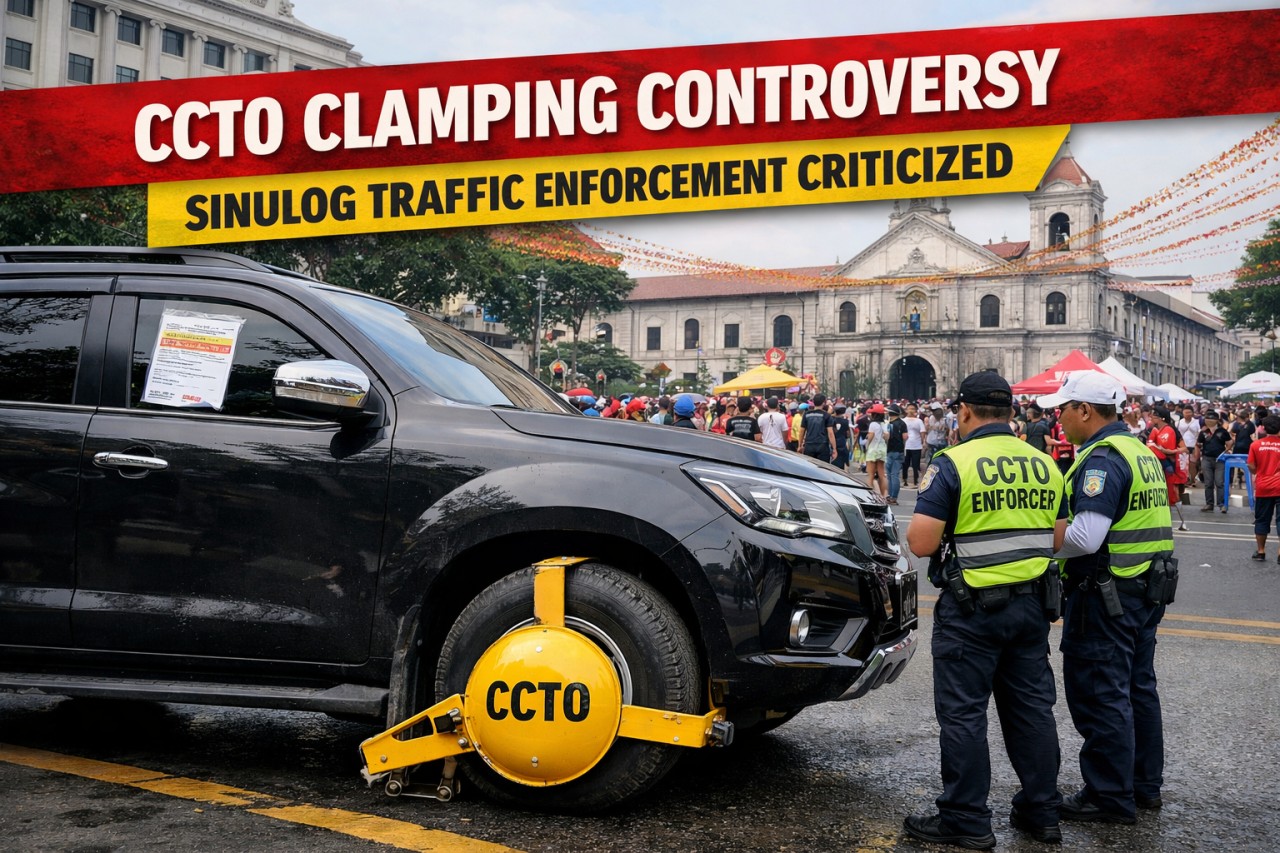
Clamping Incident That Escalated Quickly
The incident happened along roads near Cebu City Hall, where thousands of devotees gathered for the annual novena masses at the Basilica Minore del Sto. Niño. To manage the heavy influx of people and vehicles, authorities implemented road closures, rerouting, and strict no-parking rules.
CCTO said the clamping was part of standard procedure after receiving complaints about illegally parked vehicles in a designated no-parking zone. Traffic enforcers found several unattended and unmarked private vehicles, prompting them to install clamp boots.
However, the situation quickly became controversial when it was revealed that some of the clamped vehicles belonged to city councilors, including those who reportedly had sticker passes issued for Sinulog.
Confusion Over “Sticker Passes”
According to CCTO, these stickers only allowed access to certain areas and did not serve as parking permits. The agency stressed that all vehicles—regardless of ownership—must follow existing parking rules, especially during high-traffic events.
“Parking privileges apply only to properly identified vehicles,” the office explained, noting that enforcers could not immediately verify ownership since the vehicles were unattended at the time.
The clamps were later removed after the vehicle owners arrived and identified themselves. No citation tickets were issued.
CCTO Clamping Sparks Debate
Despite this, the incident sparked backlash from some officials. Councilor Pastor “Jun” Alcover criticized the enforcement, calling it “palpak” and accusing CCTO leadership of being disrespectful. He questioned why vehicles of government officials were clamped despite prior instructions to use the area for temporary parking.
Councilor Winston Pepito, whose vehicle was among those affected, downplayed the issue but acknowledged a “communication gap” within City Hall. He said councilors were told to park in the area because their usual parking spaces were temporarily unavailable due to the influx of devotees.
CCTO chief Raquel Arce defended the operation, saying enforcement was necessary due to worsening congestion. She clarified that the area was reserved for emergency vehicles and that even police units had difficulty accessing parking spaces because of unauthorized vehicles.
She also emphasized that the office had no intention of targeting officials and was simply carrying out its mandate to ensure traffic order and public safety.
The controversy has highlighted ongoing challenges in managing traffic during major events in Cebu City. While stricter enforcement is seen as necessary to prevent road congestion, the incident also exposed coordination issues between local officials and traffic authorities.
As Cebu continues to host large-scale events like Sinulog, the balance between effective traffic management and clear communication remains a key concern for both authorities and motorists.