January 14, 2026 – Electric tricycles (e-trikes) remain prohibited from operating on major roads in Davao City, while authorities continue strict enforcement against illegal modified mufflers as part of efforts to improve road safety and public order.
For drivers and operators, learning about local traffic rules such as these and complying with regulations to avoid sanction is important. After all, as enforcement efforts intensify, adherence to traffic laws remains essential to maintaining safety and efficiency, especially on Davao’s roads.
Davao CTTMO Still Bans E-Trikes
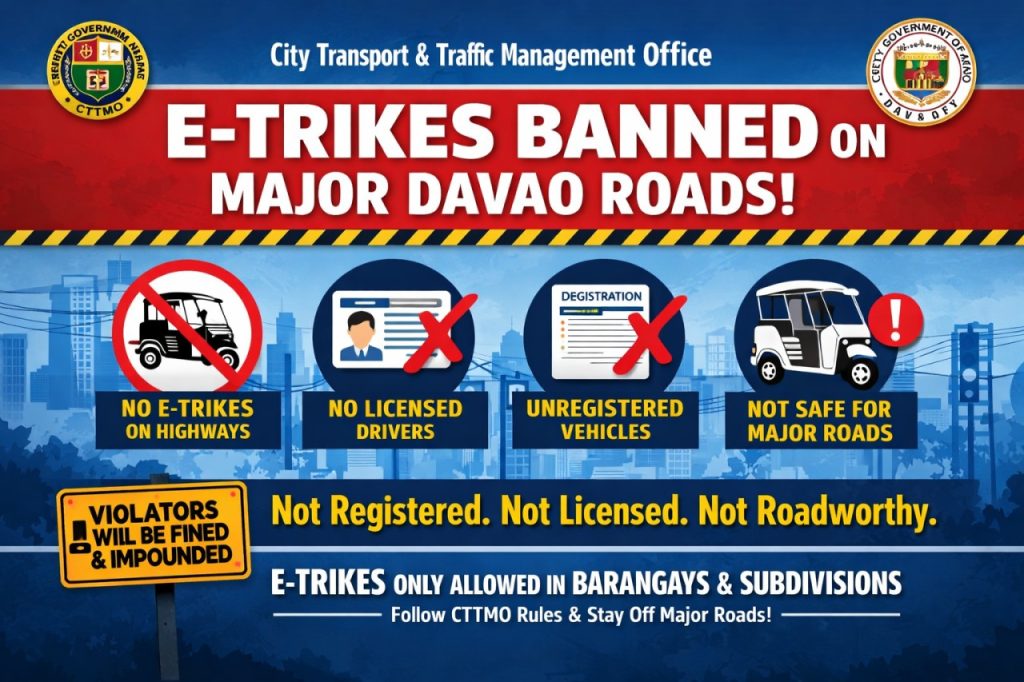
The Davao City Transport and Traffic Management Office (CTTMO) reiterated that there is still no local ordinance allowing e-trikes to carry passengers or travel along national highways and major city streets. CTTMO head Dionisio Abude explained that, unlike motorcycles-for-hire, e-trikes do not comply with standard requirements such as registration, licensing, and roadworthiness.
Abude also raised safety concerns, noting that even as it becomes more popular, many e-trikes still lack enclosed passenger cabins, making them unsuitable for high-speed or high-volume roads. Because of this, authorities consider their operation on major roads a violation and a potential risk to both passengers and other motorists.
Under current rules, e-trikes are only allowed to operate within barangays, subdivisions, and other residential areas. Those found plying major roads may face penalties, including fines and possible impoundment.
Brief History: E-Trike Ban in Davao
E-trikes were never formally allowed on major roads in Davao City, even when they started appearing as a cheaper, eco-friendly transport option in communities. As their numbers grew, many began informally operating on highways and busy streets, which raised concerns about safety, lack of registration, and unlicensed drivers. The city already had traffic rules under Comprehensive Transport and Traffic Code (Ordinance 0334-12, 2012), which set strict standards for vehicles using major roads—standards e-trikes did not meet. Over time, the CTTMO clarified and strictly enforced the restriction, especially as traffic volume increased and accidents became a concern.
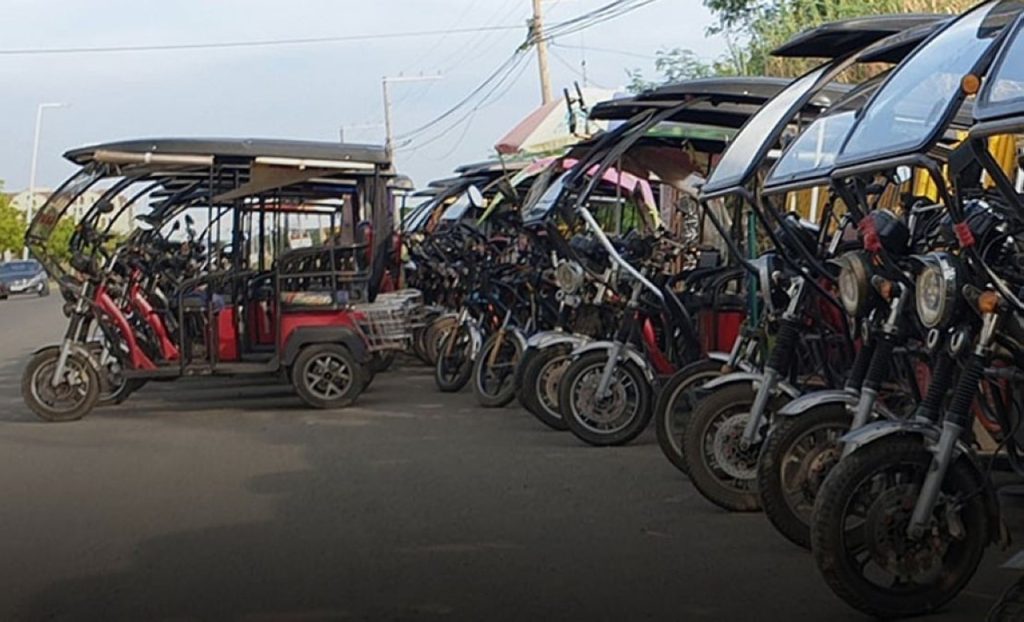
Bottom line: The “ban” didn’t start at a single moment—it has always existed in practice, but enforcement became stricter in recent years as e-trike use expanded.
Common Violations
E-trikes are NOT allowed on major roads and highways in Davao City. If you drive one on any of the city’s major roads, you may be cited for:
- Unauthorized vehicle on restricted roads
- No driver’s license or improper license
- Unregistered vehicle
- Unsafe vehicle (no closed cab)
- Disobeying traffic signs or causing obstruction
Note: These violations can stack, meaning you can be fined multiple times in one stop.
Fines and Penalties
Some of the fines and penalties associated with using e-trikes on major roads in Davao City are as follows:
- Traffic Citation Ticket (TCT):
- Usually starts around ₱500+ per violation
- Must be paid within 7 days
- Vehicle Impoundment:
- E-trikes on major roads can be confiscated
- Penalties if unpaid:
- Extra charges
- Blocked permits or clearances
Future Plans
The CTTMO clarified that while e-trikes are banned on major roads for now, e-trikes may still be allowed in the future if they are classified under an “unconventional” category and meet specific requirements. These include proper registration, a licensed driver, roadworthy units, and the installation of closed cabins to ensure passenger safety. Until such standards are met and formalized through an ordinance, the ban will remain in effect.
The ongoing enforcement against unauthorized vehicles reflects the city government’s broader push to ensure safer, quieter, and more orderly roads.