February 03, 2026 — The Davao City Transport and Traffic Management Office (CTTMO) is all set to roll out stricter parking enforcement as it begins a pilot run of wheel clamping in Davao in March 2026, with full implementation expected by April. Motorists who park illegally risk fines, plus existing penalties.
The wheel clamping policy comes after the approval of amendments to the city’s traffic code in October 2025, allowing authorities to immobilize illegally parked vehicles using wheel clamps or tire locks.
Pilot Run Begins in March

According to CTTMO officer-in-charge Lawyer Eduardo Perez IV, around 60 personnel went training on February 9 and 10, 2026, to ensure proper and consistent enforcement. The training not only include proper installation of clamps, documentation of violations, and coordination with traffic enforcement teams, but also integrates existing procedures to align with the new ordinance.
A pilot implementation is also scheduled for March 2026, where authorities will focus on testing operations and informing the public about the updated rules. During this phase, no penalties will be imposed yet, as the city prioritizes awareness and adjustment among motorists.
Perez said the target for full implementation is April 2026, once systems, documentation, and equipment are fully in place.
The wheel clamping policy stems from amendments to the Davao City Traffic Code, which were approved by the City Council on October 21, 2025. The measure allows authorities to immobilize vehicles parked illegally on designated roads using wheel clamps or tire locks.
Under the ordinance, fines will be imposed once full enforcement begins.
Full Enforcement Starts April
By April 2026, full enforcement of the wheel clamping ordinance will begin.
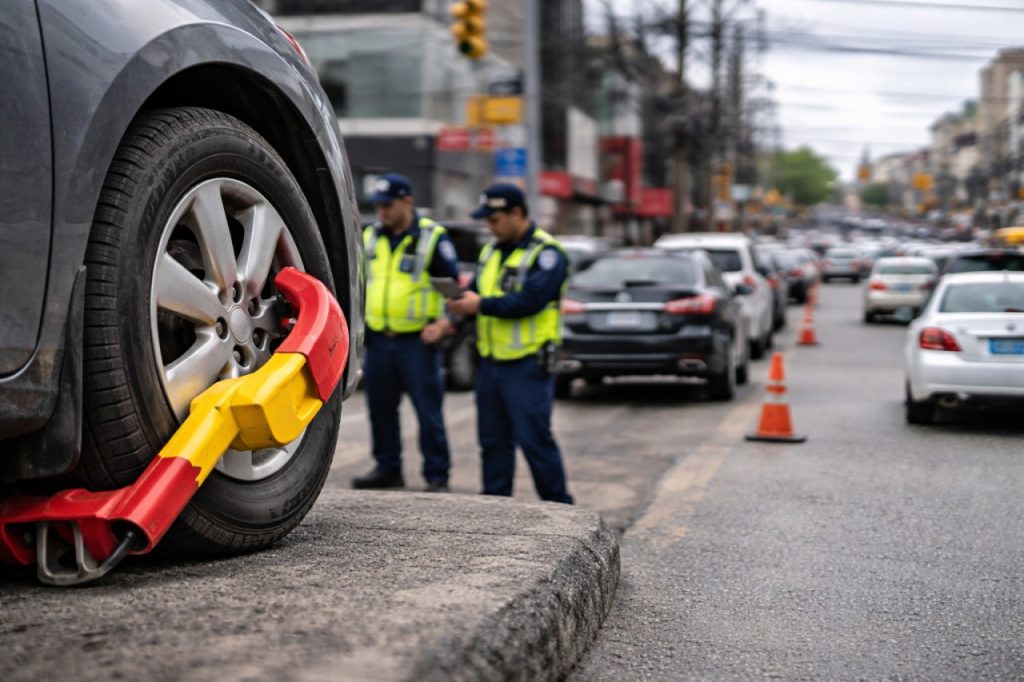
Once implemented, vehicles found illegally parked in designated areas may be clamped immediately. Drivers will need to settle fines and fees before their vehicles can be released.
The penalties are as follows:
- ₱2,000 for light vehicles
- ₱5,000 for trucks and heavy vehicles
These charges are separate from existing illegal parking tickets, increasing the total cost for violators.
Initial Areas for Clamping
Authorities identified several high-traffic areas where wheel clamping will first be enforced. These initial clamping zones include major and high-traffic areas such as:
- R. Castillo Street (Agdao to Lasang)
- Parts of Quimpo Boulevard
- Sandawa area
- Ecoland Drive
These locations were identified due to frequent illegal parking that contributes to congestion.
Current Status
To support the rollout, the CTTMO is currently procuring wheel clamps and has already identified suppliers. At present, only four old clamps are available and are being used for training purposes.
The city has also started preparing traffic signage to clearly mark clamp zones. Installation of these signs was required by the City Council to ensure motorists are properly guided.
Clamping Procedures
Here’s how it’s supposed to be carried out:
- According to the authorities, if a driver is present during enforcement, they will be asked to move the vehicle immediately but will still receive a citation ticket.
- If the vehicle is unattended, then it will be clamped and can only be released after payment of fines at the City Treasurer’s Office.
The implementation is expected to strengthen enforcement against illegal parking, which remains one of the main causes of traffic congestion in Davao City.
Officials said the measure is not only punitive but also aims to promote discipline among motorists and improve traffic flow, especially along major roads and commercial areas. By immobilizing vehicles, the policy aims to discourage repeat violations and encourage motorists to follow parking rules more strictly.
Motorists are advised to stay alert for new signage and avoid parking in restricted areas as the city transitions into stricter enforcement in the coming months.
With stricter enforcement coming, authorities are urging the public to cooperate to ensure smoother traffic flow and more disciplined traffic management across Davao City.