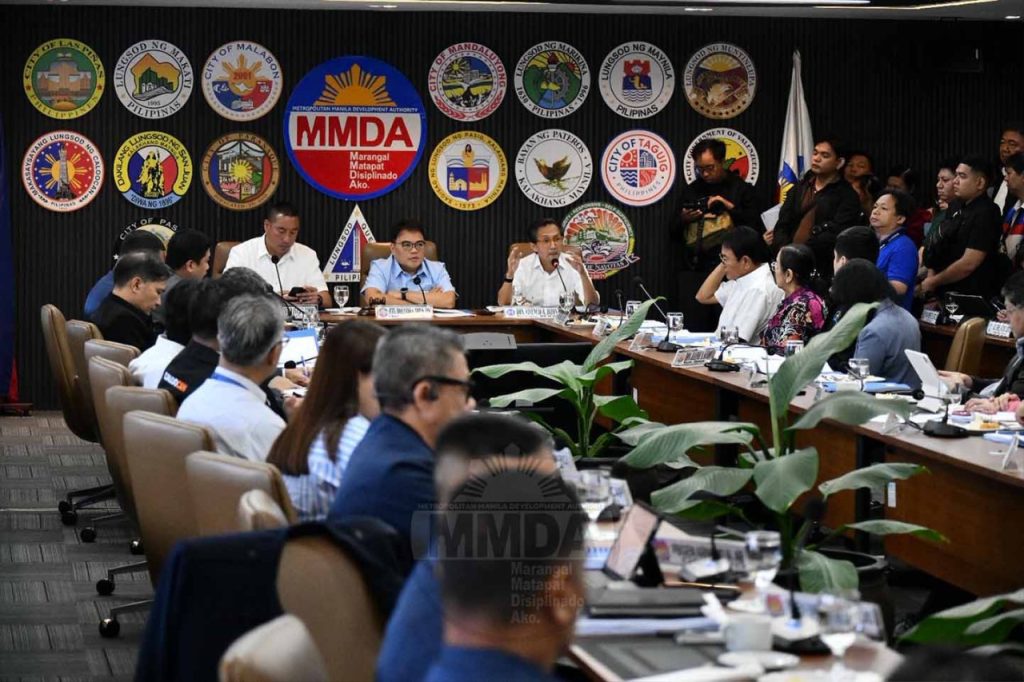
March 24, 2026 — The Metropolitan Manila Development Authority (MMDA), along with the Metro Manila mayors, has approved a resolution granting a coding exemption to fuel tankers and trucks carrying essential goods, removing them from the number coding scheme and truck ban, allowing them to move freely to ensure stable fuel supply and faster delivery of basic goods across Metro Manila.
The decision was made during a Metro Manila Council (MMC) meeting on March 24, following requests from the Department of Energy (DOE) and the Department of Trade and Industry (DTI).
MMDA Coding Exemption Overview
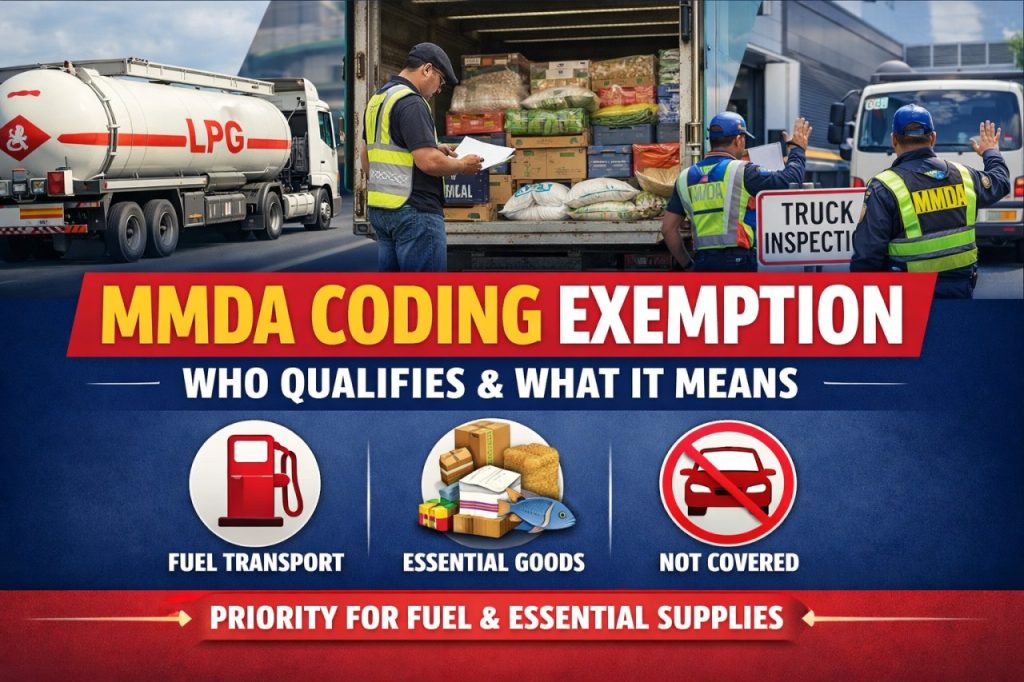
Under the approved resolution, fuel tankers—including LPG carriers—and cargo trucks transporting essential goods will no longer be covered by the Unified Vehicle Volume Reduction Program (UVVRP), commonly known as the number coding scheme. These vehicles are also exempted from existing truck ban policies. The resolution will take effect once it is published in at least two newspapers of general circulation.
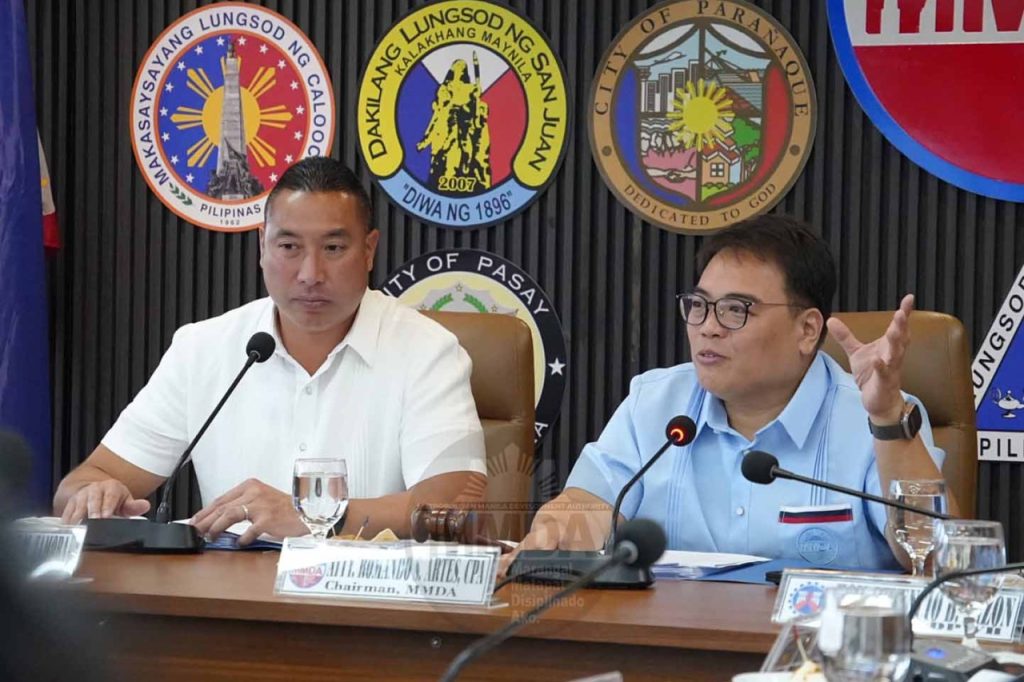
MMDA Chair Romando Artes said this move aims to ensure the smooth and continuous delivery of petroleum products and basic commodities across the National Capital Region.
“This would ensure the unimpeded movement of energy sources and ease the mobility of goods amid the rising price of fuel products,” Artes said.
Coverage of the Coding Exemption
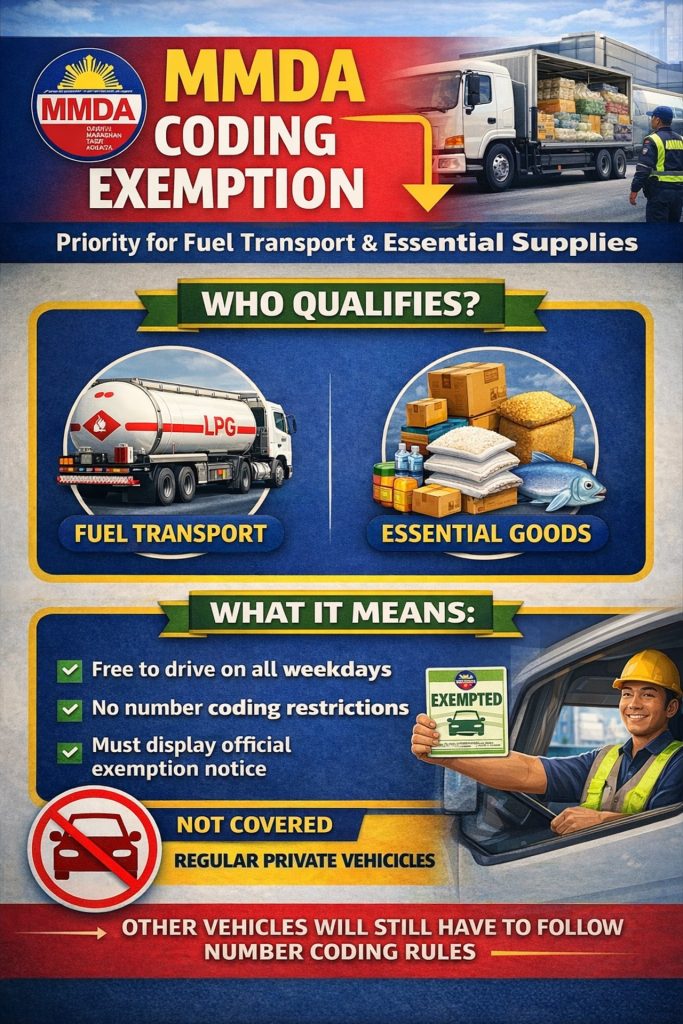
According to the MMDA, these vehicles that can legally skip number coding and truck bans:
1. Fuel Transport Vehicles
- Fuel tankers (gasoline, diesel)
- LPG carriers (including bullet tanks)
- Other petroleum delivery trucks
Note: These are automatically prioritized because fuel keeps the entire economy running.
2. Trucks Carrying Essential Goods
These are cargo trucks delivering critical daily supplies, such as:
- Food and agricultural products
- Medicine and medical supplies
- Basic commodities (to be finalized by the Department of Trade and Industry)
- Other goods classified as “essential”
Note: The exact list is yet to be finalized with the DTI, so not all cargo trucks qualify yet. According to the MMDA, they will still coordinate with the DTI to identify which goods will qualify as “essential” under the exemption.
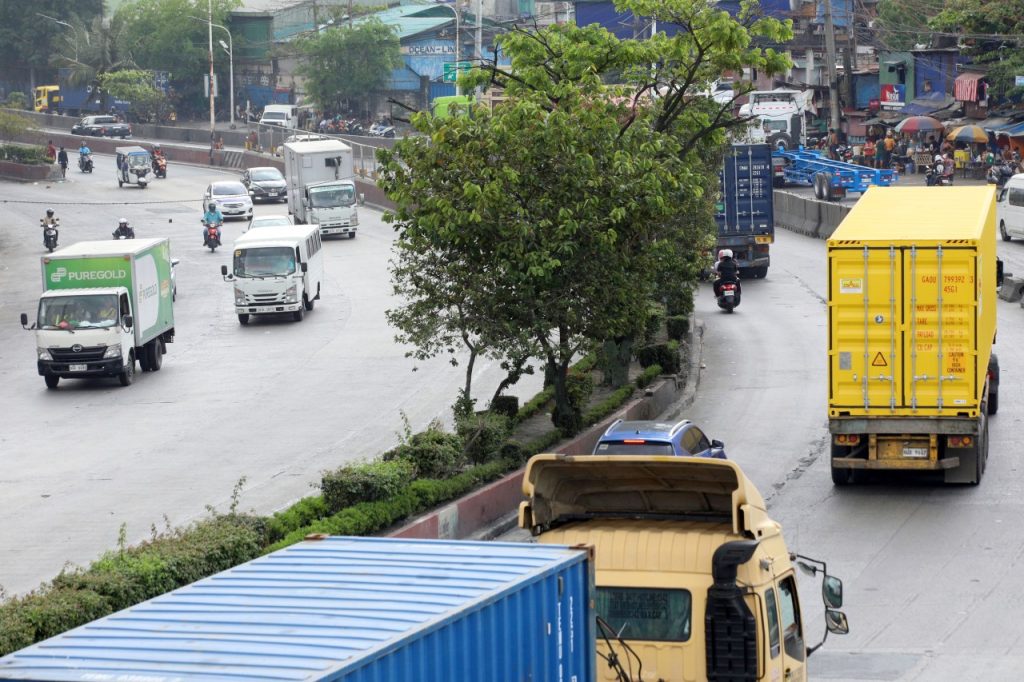
You would also want to note that the following are not covered by the coding exemption:
- Private vehicles (cars, SUVs, motorcycles)
- Trucks carrying non-essential or commercial goods
- Delivery vehicles without proof of cargo
- Colorum or undocumented logistics operators
If your vehicle is not directly tied to fuel or essential goods, the number coding restriction still applies to you.
Holy Week Traffic Measures
Meanwhile, the MMDA announced preparations for the expected surge of travelers during Holy Week.
MMDA General Manager Nicolas Torre III said a total of 2,476 personnel will be deployed across major roads, transport terminals, and other key areas in Metro Manila.
Authorities will implement a no day-off, no-absent policy for traffic and field personnel to manage congestion during the holiday exodus.
The agency also confirmed that the number coding scheme will be temporarily suspended starting 12 noon on April 1 until April 3, covering Maundy Thursday and Good Friday.
In addition, provincial buses will be allowed to use EDSA from 9 p.m. on April 1 until 6 a.m. on April 6 to accommodate increased passenger demand.
The MMDA said these measures are part of its broader effort to maintain traffic flow and ensure the steady movement of goods and commuters during peak travel periods.