March 17, 2026 — The Metropolitan Manila Development Authority (MMDA) has launched free shower and end-of-trip facilities in Pasig City to support cyclists, especially those commuting to work. This move aims to make biking more practical, hygienic, and accessible—addressing one of the biggest concerns of Filipino commuters: arriving sweaty and unprepared at work.
More than just a comfort upgrade, the project signals a bigger shift. MMDA is pushing for a bike-friendly Metro Manila, reducing road congestion, easing traffic, and giving commuters a real alternative to daily gridlock. For motorists and cyclists alike, this could mean fewer cars on the road—and smoother travel overall.
MMDA Pushes for Sustainable Transport
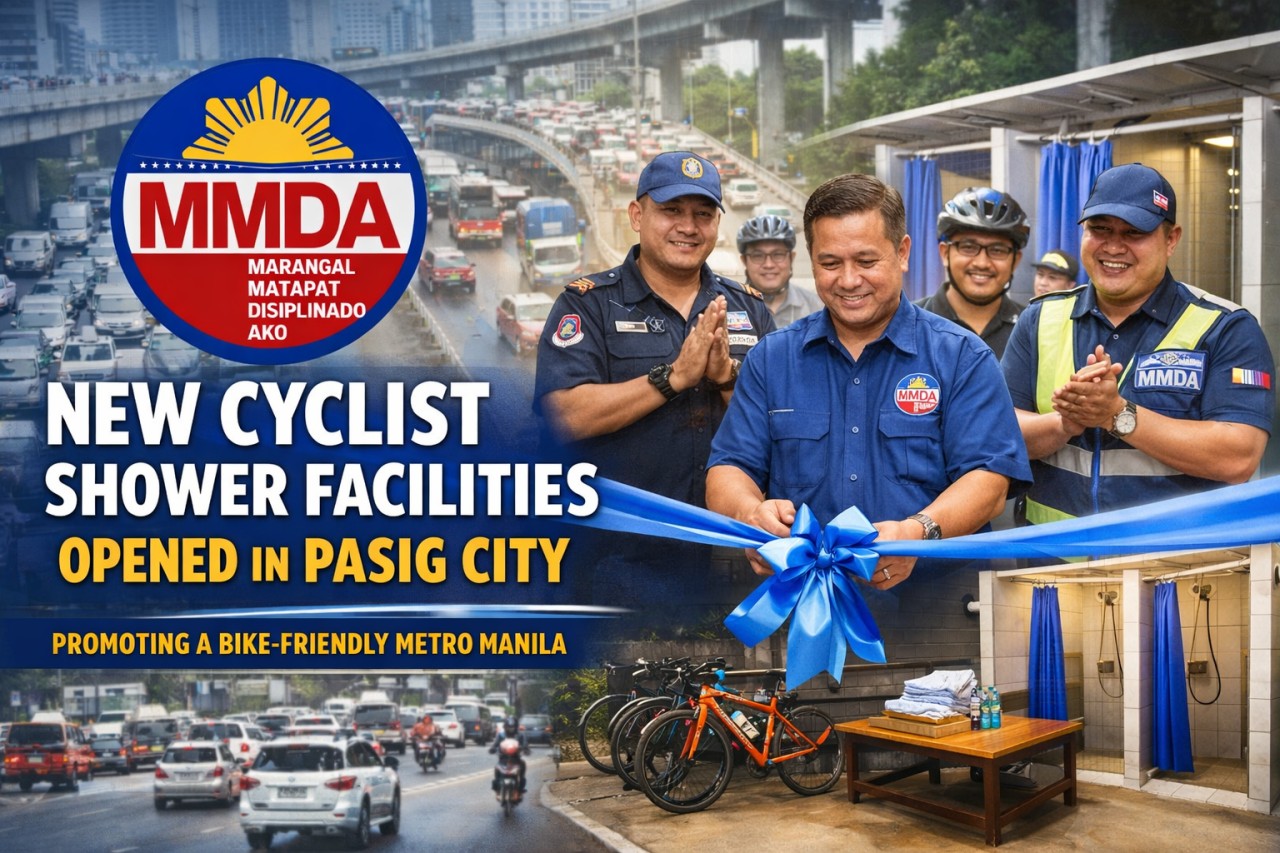
In a concrete step toward sustainable transport, the MMDA has officially opened its Bike-to-Work End-of-Trip (EoT) facilities at the Motorcycle Riding Academy in Pasig City. The facility provides free shower rooms, changing areas, and bike racks—practical solutions that directly respond to the daily struggles of Filipino cyclists.
For years, one major barrier to cycling to work in Metro Manila has been simple but real: hygiene. You can bike to the office—but what about the sweat, the heat, and the lack of facilities? MMDA’s new initiative tackles that head-on.
The Pasig City site includes four shower rooms (male, female, and all-gender options), along with secure parking for bicycles and designated changing spaces. These aren’t luxury add-ons—they’re essential if cycling is to become a serious commuting option.
Future Plans
MMDA Chairperson Don Artes made it clear: this is just the beginning. The agency plans to roll out similar facilities across Metro Manila, aligning with the national government’s push for sustainable and inclusive transportation systems.
That matters more than people realize.
Right now, around 1,700 cyclists use the EDSA bike lane daily. That’s a small number compared to total commuters—but it’s growing. And growth depends on support systems like this. Without safe lanes and basic facilities, cycling stays a niche. With them, it becomes viable.
Impact on Transport, Traffic, and Sustainability
MMDA General Manager Nicolas Torre III emphasized that the goal is simple: protect the welfare of cyclists. But in reality, the impact goes beyond that. Every cyclist supported is potentially one less car contributing to traffic congestion.
And for motorists reading this, that’s the key takeaway.
Less dependence on cars means less pressure on already congested roads. In cities like Pasig—where traffic can easily spiral during peak hours—even small shifts in commuter behavior can have noticeable effects.
The project also shows strong public-private collaboration. Companies like Maynilad, Manila Water, and Meralco are helping subsidize utilities, while Regasco has committed hygiene supplies such as soap, shampoo, and towels. This kind of partnership is crucial if the program is to scale sustainably.
Still, let’s be clear—this is a pilot program.
There are gaps to watch:
- Will the facilities be accessible 24/7?
- Can they handle higher demand if cycling increases?
- Will similar projects reach other high-traffic cities like Quezon City or Manila?
MMDA says it is exploring round-the-clock operations and expansion. That’s a good sign—but execution will determine success.
Practical Advantages
At its core, this initiative isn’t just about showers. It’s about changing how Filipinos move. It practically translates to the following benefits:
- If you’re a cyclist: You now have a safe place to freshen up in Pasig—use it. Register upon entry and take advantage of the free service.
- If you’re considering biking to work: This removes one major excuse. Start small—try biking once or twice a week.
- If you’re a motorist: Expect gradual changes. More bike-friendly policies could ease traffic long-term—but may also mean stricter lane enforcement.
- If you’re a business owner: This is your cue. Supporting cyclists (bike racks, showers) isn’t just CSR—it’s future-proofing.
And if MMDA follows through, this could be one of the smarter, more human-centered solutions to Metro Manila’s traffic problem.