February 19, 2026 — The Pasay Traffic and Parking Management Office (TPMO) has opened a new designated loading bay along Roxas Boulevard to reduce roadside chaos, improve traffic flow, and If consistently enforced and adopted by commuters, the loading bay system could become a scalable model for other choke points across Pasay and beyond commuting safer. This move targets one of the biggest daily problems motorists face—jeepneys stopping anywhere—by centralizing passenger loading in one organized location.
For drivers, commuters, and even riders navigating Metro Manila’s complex road systems (including number coding zones), this signals a stronger push toward disciplined traffic management. With support and alignment from broader road authorities like the MMDA, this initiative reflects a growing effort to make Philippine roads more predictable, safer, and less stressful.
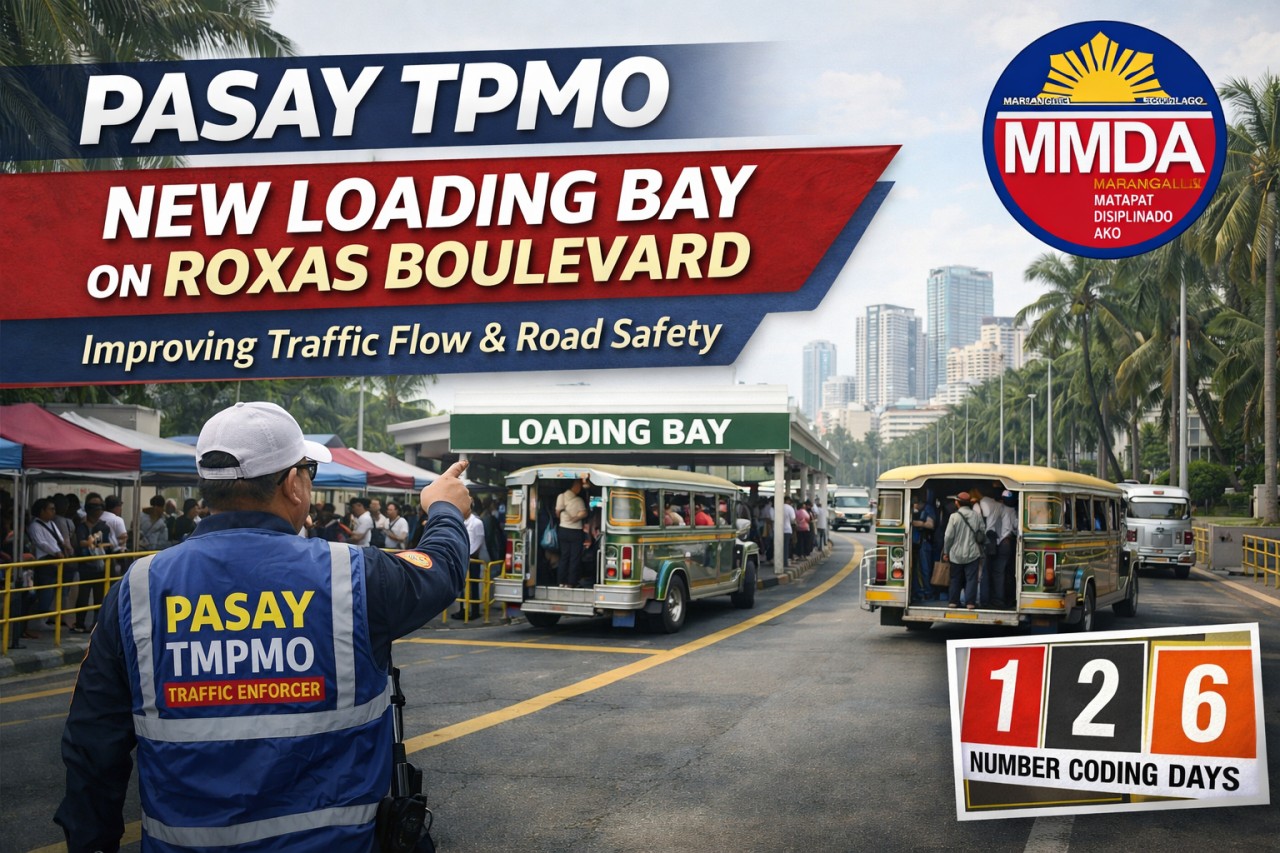
The Pasay TPMO Fix
If you’ve ever driven along Roxas Boulevard, you’ve probably seen it before: jeepneys stopping anywhere, passengers crossing unpredictably, and traffic suddenly slowing down for no clear reason.
The Pasay TPMO is finally addressing that.
A new loading bay has been officially opened in front of the Heritage Hotel, specifically for jeepneys traveling to Sucat, Alabang, Imus, and Dasmariñas. Instead of random stops, all passenger pick-ups are now funneled into one controlled area—one move that could significantly reduce bottlenecks in the city.
This newly established loading bay is equipped with visible signage, designated stopping areas for jeepneys bound for Sucat, Alabang, Imus, and Dasmariñas, and is actively managed by on-ground enforcers to ensure compliance. It was designed as a tool to help shift from reactive traffic control to preventive road design, where behavior is shaped by structure rather than constant enforcement alone.
By formalizing loading and unloading as it happens, the city reduces friction points that slow down vehicles and endanger pedestrians. The expected effect is multi-layered: smoother vehicle movement along Roxas Boulevard, reduced travel time variability for motorists (especially those affected by number coding schedules), and safer, more organized commuting for the public. If consistently enforced and adopted by commuters, the loading bay system could become a scalable model for other choke points across Pasay City and beyond.
In the long run, this also supports broader Metro Manila traffic strategies led by agencies like the MMDA, aligning local enforcement with regional goals. If it works, it can prove that small, well-placed infrastructure changes can deliver outsized impact on daily traffic conditions.
Why This Matters
This isn’t just about commuters lining up neatly. This is about fixing one of the root causes of urban traffic in the Philippines.
Here’s the real issue:
- Jeepneys stopping anywhere = sudden braking
- Passengers loading on the road = lane obstruction
- No designated zones = unpredictable flow
By centralizing loading:
- Traffic becomes more predictable
- Road space becomes more efficient
- Accidents become less likely
This aligns with the broader traffic discipline goals enforced across Metro Manila. While the MMDA sets metro-wide policies like number coding, local offices like the Pasay TPMO are the ones executing on-the-ground solutions like this. And frankly, this is where real change happens.
It sends a clear message: Convenience should not come at the cost of everyone else’s time and safety.
But here’s the catch—this only works if people cooperate.
How to Avoid Trouble
If you want smoother drives and less stress on the road, here are some tips for you:
For Drivers:
- Expect less random stops near the loading bay—adjust your driving accordingly
- Stay alert near the designated zone, but anticipate more organized flow
- Follow lane discipline—don’t counter-flow just to avoid minor slowdowns
For Commuters:
- Head straight to the designated loading bay—don’t wait roadside
- Follow traffic enforcers (they’re there to help, not hassle you)
- Build the habit—this only works with consistency
This isn’t a flashy project. No flyovers. No new highways. But it is a real pain point—and if enforced properly, this could become a model for other cities.
The real question is:
Will people follow?
Because in Philippine traffic, the system only works if everyone plays their part.